
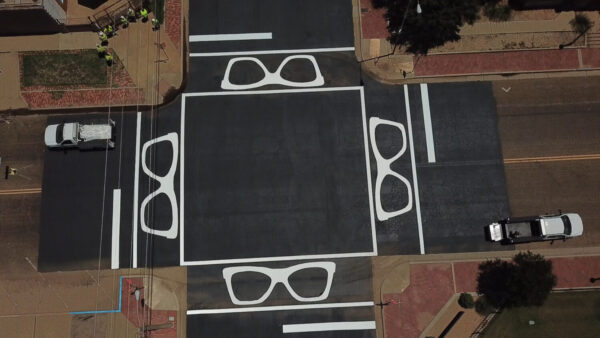
For Lubbock, the removal of the Buddy Holly Crosswalk sparked more than a quick reaction. It opened up a deeper conversation about how the city honors its history, how public art fits into everyday spaces, and how identity is expressed beyond statues and buildings. While the crosswalk itself was a simple design, it carried meaning for many people who walked across it, photographed it, or pointed it out to visitors as something uniquely Lubbock.
The Buddy Holly Crosswalk stood as a small but visible nod to one of the city’s most famous figures. Buddy Holly’s influence on music is well known, and Lubbock has long embraced that connection through museums, venues, and events. The crosswalk added something different to that mix. It was not tucked away behind walls or reserved for special occasions. It lived in the flow of daily life. People encountered it on their way to work, while downtown for an event, or simply passing through. That accessibility is part of why its removal felt noticeable.
Public art often works quietly. It does not always announce itself, but it shapes how people experience a place. In this case, the crosswalk blended function and creativity. It served a practical purpose while also telling a story. When it was removed, the absence made people pause and ask why it mattered so much. That reaction alone shows the power of small artistic touches in shaping how a city feels.
The decision to remove the crosswalk also highlights the challenges cities face when balancing creativity with safety, maintenance, and regulations. Public spaces must function for everyone, and sometimes that means making difficult calls. Even so, those decisions can feel personal when the art involved is tied to local identity. For Lubbock, Buddy Holly is not just a historical figure. He represents a point of pride and a reminder that global influence can come from a West Texas hometown.
What makes this moment interesting is not just the removal itself, but the conversation it triggered. Residents began talking about where public art belongs, how it should be protected, and what forms it should take in the future. Some saw the crosswalk as a symbol of creativity woven into infrastructure. Others viewed it as a temporary expression that served its purpose and made room for something new. Both perspectives reflect a community that cares about how its story is told.
Lubbock’s identity has always been layered. It is rooted in music, education, resilience, and a strong sense of place. Public art plays a role in expressing those layers, especially as the city grows and changes. Murals, sculptures, and creative installations help shape how people feel about the spaces they share. When one piece disappears, it naturally raises questions about what should replace it and how intentional those choices should be.
The removal of the Buddy Holly Crosswalk does not erase the city’s connection to its musical heritage. That legacy is firmly established. But it does serve as a reminder that identity is not fixed. It is shaped through ongoing decisions, dialogue, and participation. Cities evolve, and so does the way they choose to express who they are.
In many ways, this moment offers an opportunity. It invites reflection on how Lubbock wants to celebrate its culture in public spaces going forward. It encourages residents to speak up about what matters to them and how art can coexist with function. It also challenges leaders and creatives to think about new ways to integrate meaning into the everyday landscape.
The crosswalk may be gone, but the conversation it sparked remains. That conversation is part of Lubbock’s identity too. A city willing to discuss its public art, question its choices, and imagine what comes next is a city that cares deeply about how it presents itself to the world. In that sense, the removal of the Buddy Holly Crosswalk says less about loss and more about awareness. It reminds us that even small details can carry big meaning, and that Lubbock’s story continues to be written in both visible landmarks and the shared values behind them.
Check out this article next